The Producer
Alvi’s Drift is the Breede River estate named for Oupa Alvi van der Merwe — the 221st Springbok, capped in 1928. At 19 he scored the first try ever recorded against the touring All Blacks on South African soil, then toured Britain and Ireland in a Springbok side that returned undefeated. The 221 range is a toast to that story: wines built to be shared, on the table, with the people who matter.
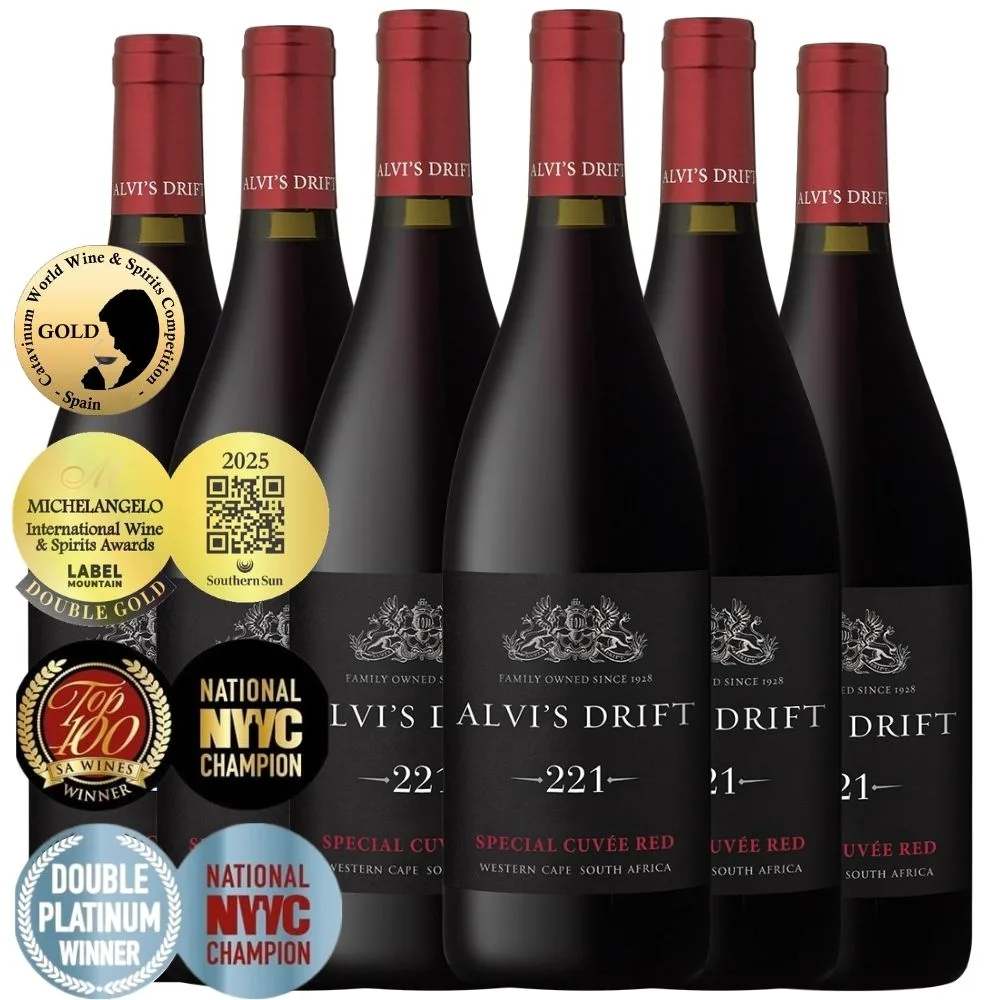
Four generations on, Alvi’s Drift has grown into one of the Breede River’s most decorated producers, with a cellar that collected Top 100 & Double Platinum at the National Wine Challenge and Double Gold at Michelangelo in 2024 alone. The estate sits on a Mediterranean pocket between the Langeberg and Riviersonderend mountains, watered by the Breede and farmed sustainably with compost produced on-site.
You’ll find the full Alvi’s Drift selection on Vinty at /wineries/alvis-drift/ — estate pricing, case delivered to your door.
Vintage & Terroir
The Breede River valley is Mediterranean in climate and mosaic in soil — ancient alluvial deposits, decomposed granite, shale and clay sitting side by side in the same vineyard block. For a seven-varietal blend like the Special Cuvée, that diversity is the point: each variety ripens on the soil that flatters it most. 2022 was a measured, even vintage across the region — no heat spikes, no rain dramas — and the Special Cuvée was, in Christine Rudman’s own framing, “meant to be accessible yet show complexity.” That’s what a kind year gives you.
In the Cellar
All seven varieties are estate-grown, hand-harvested in the cool of early morning, and — critically — vinified separately before blending. Around 30% of the blend is wild-yeast fermented and matured for 12 months in a combination of American and French oak; the remaining portion ferments in stainless steel to keep the primary fruit clear and unmuddied. Only the tanks and barrels that cleared the estate’s tasting panel made the final cut. The winemaking intent is Alvi’s Drift’s stated signature for the range: “elegant yet approachable” — complexity without heaviness.
Tasting Notes
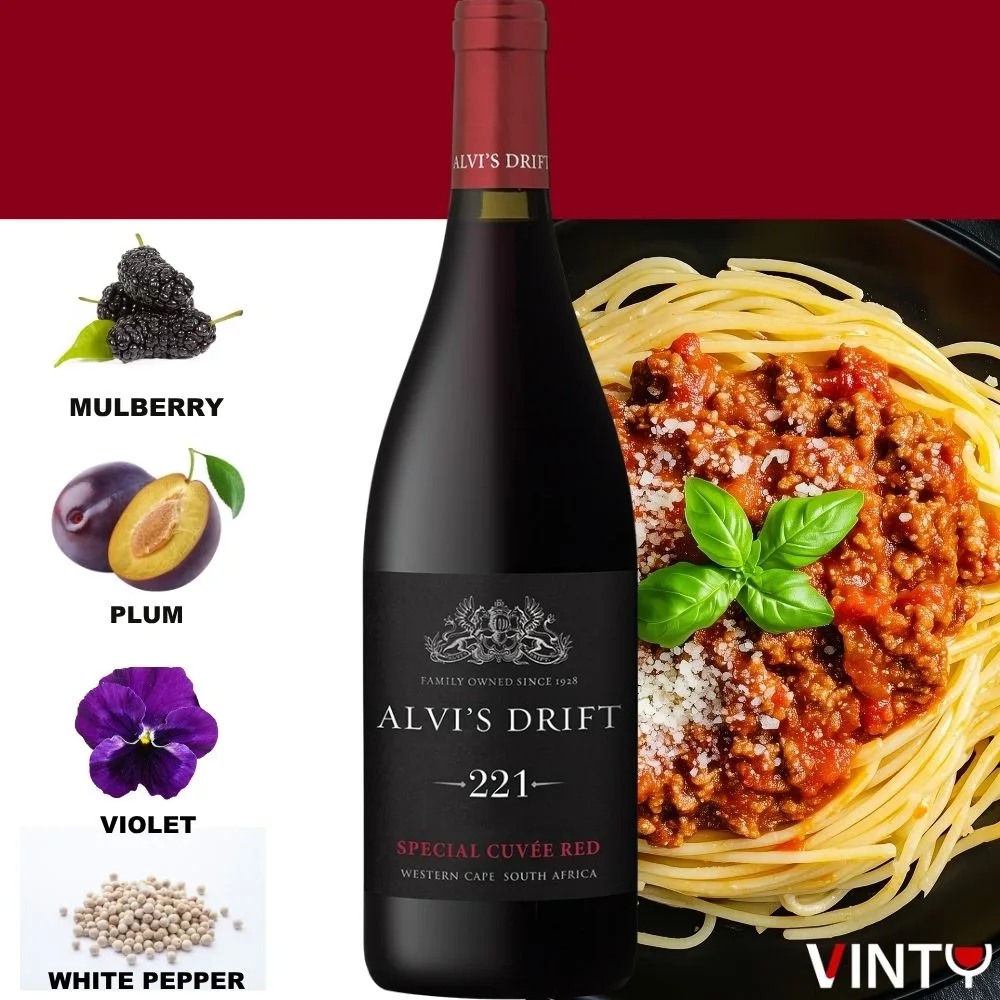
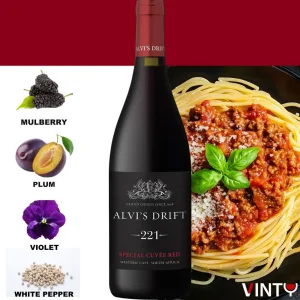
Deep ruby in the glass. The nose opens with mulberry and plum, lifted by a clear note of white pepper, violet, and a gentle herbal edge. On the palate it’s medium-bodied, layered with dark fruit and a brush of spice, carried by a velvety texture and well-balanced acidity into a long, satisfying finish. Christine Rudman’s 2026 Platter’s note (85 points) captures it: “vivid hedgerow fruit & savoury spice, pepper, dried herbs, palate succulent with gentle tannin.” Drinking superbly now — open, pour, enjoy. Serve at 12–14 °C.
Food Pairing
Built for the table. Pair with lamb chops off the braai, slow-roasted Karoo lamb, oxtail potjie, ostrich fillet, aged cheddar or a farmhouse Dalewood. The pepper-and-spice spine also lifts a Cape Malay bredie or a spicy tomato pasta beautifully. Sold as a case of 6 bottles — one case covers a weekend of good eating.