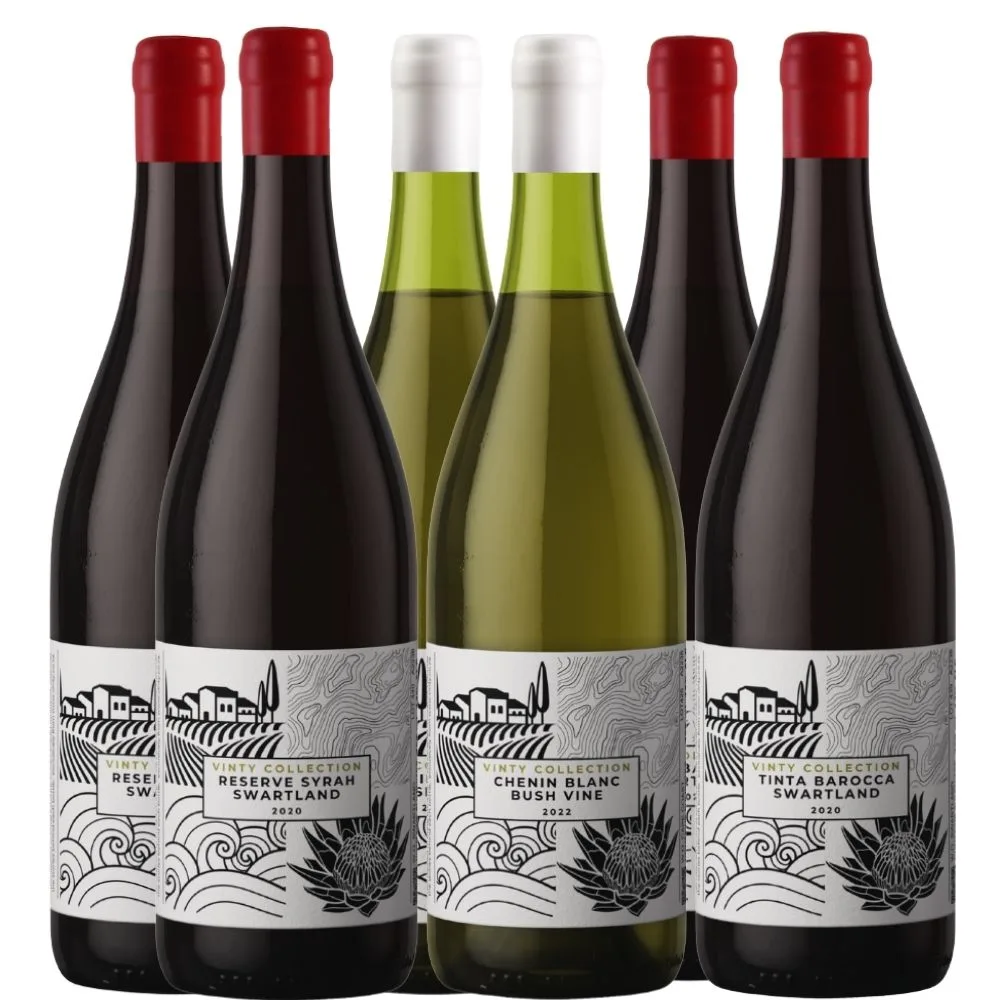

Ask a South African wine drinker to choose between Chenin Blanc and Sauvignon Blanc and you’ll quickly discover these are not just grapes — they’re allegiances. Both have deep roots in the Cape winelands, both thrive in our diverse terroir, and both regularly produce bottles that punch well above their price point. But they are fundamentally different wines, and knowing which is which will transform the way you shop, pair, and drink.
This guide breaks down the chenin blanc vs sauvignon blanc debate with a South African lens — covering taste profiles, food pairings, winemaking styles, and which specific bottles to try first.
Chenin Blanc vs Sauvignon Blanc: At a Glance
Before diving into the detail, here’s how the two varieties stack up:
- Chenin Blanc: versatile, high-acid, ranges from bone-dry to dessert-sweet; SA’s most widely planted white grape (~18% of vineyards)
- Sauvignon Blanc: aromatic, crisp, herbaceous or tropical depending on region; one of SA’s top white wine exports
- Best SA regions for Chenin: Swartland, Stellenbosch, Paarl
- Best SA regions for Sauvignon Blanc: Elgin, Constantia, Darling, Stellenbosch
Chenin Blanc in South Africa: Why We Do It Better
Chenin Blanc arrived in the Cape in the 17th century and never left. Known locally as ‘Steen’, it thrived in the warm, dry Swartland and Stellenbosch conditions so well that South Africa now holds some of the oldest Chenin Blanc vines in the world — many over 40 years old, some pushing 60. Old vines mean lower yields, more concentrated fruit, and wines with genuine complexity.
Chenin’s party trick is its extreme versatility. A winemaker can take the same grape and produce:
- A lean, mineral, bone-dry white for seafood
- A rich, oaked, age-worthy white that rivals Burgundy
- A vibrant, off-dry everyday sipper
- A luscious late-harvest or sparkling wine
That range is both the joy and the challenge with Chenin: the label doesn’t always tell you what style to expect, which is exactly why sourcing from a trusted curator matters.
What Does Chenin Blanc Taste Like?
Dry Chenin Blanc in South Africa typically shows green apple, quince, and white peach on the nose, with a bright acidity and sometimes a waxy, lanolin texture. Warmer-climate and old-vine expressions add layers of melon, ripe pear, and when wooded, a creamy, toasted hazelnut character. The hallmark is always that fresh, mouthwatering acidity that makes the wine feel alive.
Try it: If you want to understand what great-value South African Chenin Blanc looks like, The Contour Chenin Blanc 2024 is a standout. It’s an XCellar selection — unlabelled, sourced directly from the producer — which means you’re paying for what’s in the bottle, not the branding. Expect ripe stone fruit, a clean mineral finish, and exceptional value for a Stellenbosch Chenin at this price point.
Sauvignon Blanc in South Africa: Crisp, Aromatic, Crowd-Pleasing
South African Sauvignon Blanc has earned its stripes internationally, particularly from the cooler regions of Elgin and Constantia where the grape expresses a precision and freshness that rivals New Zealand’s Marlborough. In warmer areas like Stellenbosch and Darling, expect a rounder, more tropical take with guava, passionfruit, and white citrus.
Unlike Chenin, Sauvignon Blanc is a much more straightforward proposition for drinkers: it’s almost always dry, almost always unoaked (unless deliberately fermented in barrel to make a Fumé Blanc style), and almost always meant to be drunk young and cold. That predictability is exactly why it’s one of SA’s best-selling white wines.
What Does Sauvignon Blanc Taste Like?
South African Sauvignon Blanc spans a wide flavour spectrum depending on where it’s grown. Cooler regions (Elgin, Constantia) tend toward lime zest, fresh herbs, green pepper, and a stony minerality. Warmer sites push toward tropical fruits — guava, melon, passionfruit — with a broader, rounder palate. What they share: high aromatics, crisp acidity, and a finish that makes you reach for another sip.
Try it: The Stettyn Tobie Sauvignon Blanc 2025 is one of our best-selling whites for good reason. It delivers the classic SA Sauv Blanc profile — tropical fruit, bright acidity, clean finish — at a price that makes it a brilliant house wine or easy entertainer. Chill it down and pour it for a crowd; it never disappoints.
Chenin Blanc vs Sauvignon Blanc: The Key Differences
While both wines can be refreshing, food-friendly whites, they suit different occasions and palates:
- Complexity: Chenin has the edge for complexity, especially from old vines or with some oak influence. Sauvignon Blanc is typically more immediately expressive and simpler (in the best sense).
- Ageing: Great Chenin Blanc can age beautifully for 5–10+ years. Sauvignon Blanc is generally best drunk within 2–3 years of vintage.
- Style range: Chenin is the shapeshifter — dry to sweet, still to sparkling, unoaked to heavily wooded. Sauvignon Blanc is nearly always dry and unoaked.
- Aromatics: Sauvignon Blanc is more immediately aromatic and perfumed. Chenin’s aromatics tend to be more subtle and develop with time in glass.
- Value: Both offer excellent value at the entry and mid level in South Africa. Old-vine Chenin Blanc from premium producers can command serious prices internationally.
Food Pairing: What to Eat with Each
Chenin Blanc Food Pairings
Dry Chenin Blanc’s high acidity and stone-fruit character makes it a natural match for Cape Malay cuisine — think mild korma-style curries, bobotie, and fragrant rice dishes. It also sings alongside grilled linefish, sushi, and creamy chicken dishes. Richer, oaked Chenin suits pork belly, slow-roasted chicken, or soft-rind cheeses. Off-dry Chenin is brilliant with slightly spicy dishes that would overwhelm a drier wine.
Sauvignon Blanc Food Pairings
Sauvignon Blanc’s crisp acidity and herbal notes make it a classic match for fresh salads, goat’s cheese, asparagus, and sushi. It’s also brilliant with light seafood — grilled prawns, calamari, white fish with citrus — and summer braai sides. Avoid pairing it with heavy red meat or rich, creamy sauces where it can taste thin and sharp.
Which Should You Choose?
The honest answer: both deserve a place in your fridge. But if you’re choosing one:
- Choose Chenin Blanc if you want versatility, complexity, and a wine that rewards attention. It’s South Africa’s flagship white variety for a reason.
- Choose Sauvignon Blanc if you want an immediately crowd-pleasing, easy-drinking white that works for casual entertaining or as an aperitif.
At Vinty, we stock both — from our everyday heroes to XCellar selections sourced directly from Cape producers. Browse our full range of South African white wines and find your next favourite bottle.
Frequently Asked Questions
Is Chenin Blanc sweeter than Sauvignon Blanc?
Not necessarily. Most South African Chenin Blanc sold in the modern market is dry. Some producers make off-dry styles but it’s always stated on the label. Sauvignon Blanc is almost always dry. If you’re sensitive to sweetness, check the back label for residual sugar (RS) — anything under 4g/L is typically perceived as dry.
Which has more alcohol — Chenin Blanc or Sauvignon Blanc?
Both are generally in the 12–14% ABV range for South African examples. Warmer-climate, riper-harvest wines will tend toward the higher end regardless of variety. The difference between the two is minimal.
Can Chenin Blanc and Sauvignon Blanc be blended?
Yes, and it’s a style seen in the Cape. The Chenin adds texture and longevity while the Sauvignon Blanc contributes freshness and aromatics. The result is often a wine with more complexity than either grape alone.
The Bottom Line
South Africa is one of the few places in the world where both Chenin Blanc and Sauvignon Blanc achieve genuine excellence at accessible prices. Chenin is the more complex, versatile, and uniquely South African of the two — our very own flagship white grape. Sauvignon Blanc is the reliable crowd-pleaser that earns its place on every table.
The best way to settle the debate? Try both. Start with the Contour Chenin Blanc 2024 and the Stettyn Tobie Sauvignon Blanc 2025 side by side — two Cape classics that make the comparison easy and delicious.
Chenin Blanc vs Sauvignon Blanc — FAQs
Is Chenin Blanc sweeter than Sauvignon Blanc?
Usually, yes — but not always. Most South African Chenin Blanc is made in an off-dry style with more ripe-fruit character (peach, apple, honey), which reads as sweeter on the palate even when residual sugar is low. Sauvignon Blanc is typically bone-dry with sharper, greener acidity (grass, gooseberry, passionfruit). Modern dry Chenin from top producers can be every bit as dry as Sauvignon — always check the label for “dry” or “bone dry” if sweetness matters to you.
Which is better for braai — Chenin Blanc or Sauvignon Blanc?
Chenin Blanc wins for braai, hands-down. Its richer body and fruit-forward palate stand up to charred meat, smoky flavours, and the full cross-section of braai sides (pap, chakalaka, braaibroodjies). Sauvignon Blanc’s sharper acidity can clash with char. Save Sauvignon for the starter course — fresh salads, goat’s cheese, or crudo.
Chenin Blanc vs Sauvignon Blanc for beginners — which should I start with?
Start with Chenin Blanc. It is more food-friendly, more forgiving, and typically better value at the entry level. Sauvignon Blanc is a more specific flavour profile that people either love or find too sharp. If you’re not sure what you like yet, Chenin gives you more range to explore.
Does Chenin Blanc or Sauvignon Blanc pair better with seafood?
Sauvignon Blanc pairs better with seafood, almost universally. Its high acidity and herbaceous edge cut through oil, brine, and richness. Oysters, grilled line fish, calamari, sushi — all Sauvignon territory. Chenin works with richer, creamier seafood dishes (Cape prawn curry, creamy pasta, buttered mussels).
What’s the alcohol content difference between Chenin Blanc and Sauvignon Blanc?
Very similar. Both typically sit between 12% and 14% ABV in South Africa. Warm-climate Chenin from Paarl or Worcester can tip up to 14%; cooler-climate Sauvignon from Elgin or Darling usually stays closer to 12.5%. Alcohol isn’t a reliable way to distinguish them — use style and producer instead.
Which ages better — Chenin Blanc or Sauvignon Blanc?
Chenin Blanc, by a long way. Top South African Chenin — especially old-vine, oak-aged styles from Stellenbosch, Swartland, or Paarl — can age 15 to 20 years and develop remarkable complexity. Sauvignon Blanc is built for youth — drink within 2 to 4 years of vintage to catch it at its fresh peak.