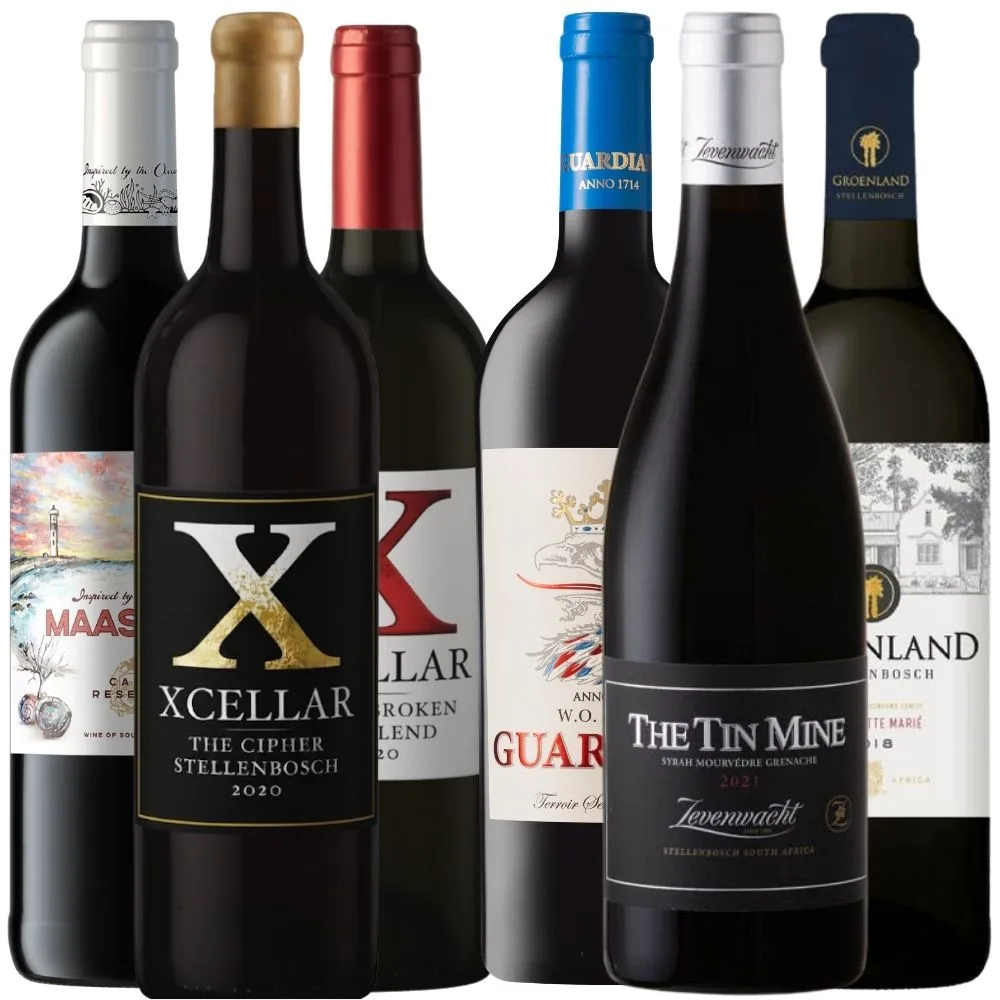

South African red blends are one of the wine world’s best-kept secrets — and that’s not just local pride talking. The Cape produces blends that sit comfortably alongside far pricier Bordeaux and Rhône equivalents, at prices that still make international wine buyers do a double-take.
The blend format suits South Africa well. Winemakers here have access to a remarkable palette: Cabernet Sauvignon, Merlot, Shiraz, Pinotage, Grenache, Cinsault, Mourvèdre, and more — often from old vines, often from diverse terroirs within a single appellation. The result is a category where creativity and quality consistently outrun the price tag.
This guide covers the value red blends worth putting in your rack right now, from producer-direct unlabelled XCellar selections through to crafted estate blends that punch well above their price.
What to Look for in a South African Red Blend
The Cape Blend is the most distinctly South African style: a red blend that must contain between 30–70% Pinotage. It’s polarising (Pinotage always is), but in the hands of the right producer it produces wines of genuine complexity and character. Beyond the Cape Blend category, there’s huge variety — Bordeaux-style blends, Rhône varieties in combination, and everything in between.
When shopping for value blends, look for:
- Vintage transparency: A producer willing to put the vintage year front and centre is proud of what’s in the bottle.
- Named varietals: Blends that list their components (e.g. Shiraz/Cinsault, Cab Sauv/Merlot) tell you something about the winemaker’s intent.
- Producer track record: Value doesn’t mean anonymous. The best-value blends come from producers with reputations to protect.
- Provenance: Stellenbosch, Swartland, and Paarl blends consistently deliver. Be more cautious with unspecified ‘Western Cape’ blends from unknown sources.
The Value Red Blends Worth Knowing
The Cipher Red Blend 2020 — Stellenbosch (XCellar)
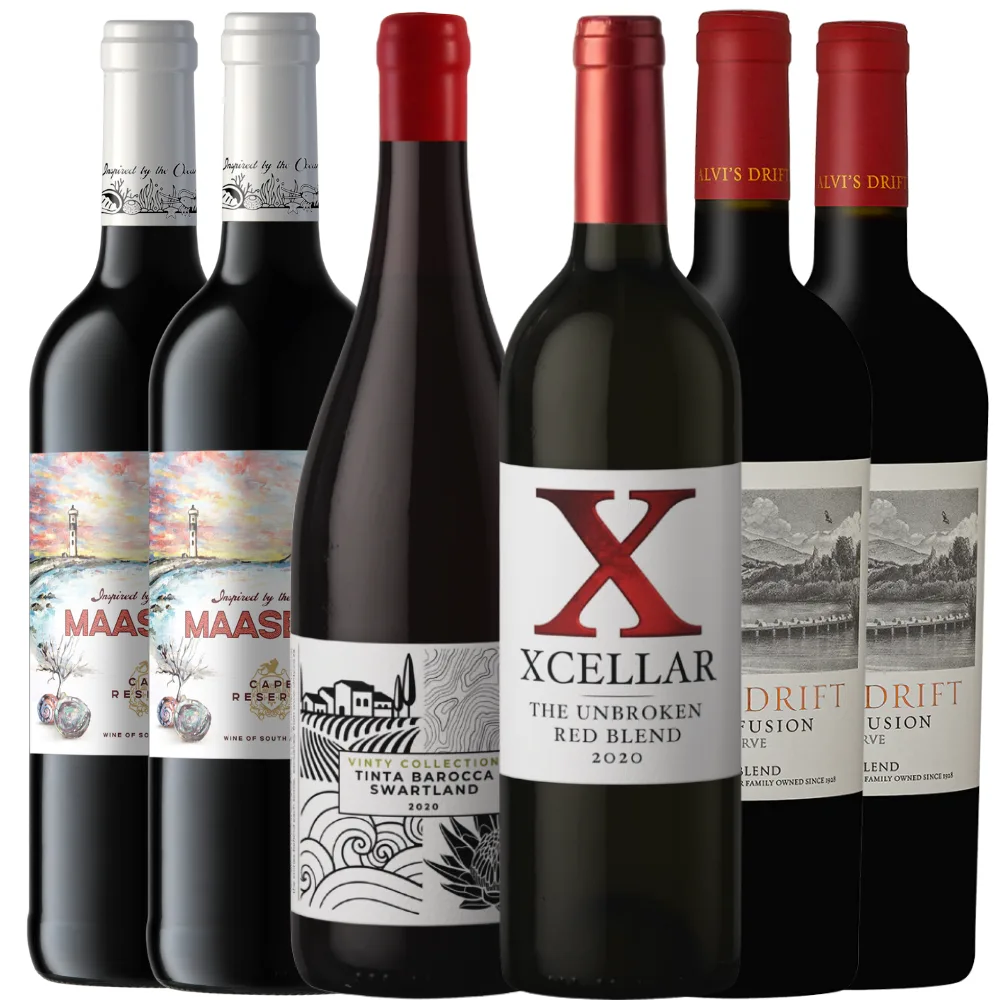
This is Vinty’s XCellar range at its best: a serious Stellenbosch red blend, sourced directly from the producer, sold without the label premium. The Cipher is structured, dark-fruited, and built with enough backbone to reward time in the rack. If you want to understand what producer-direct value looks like in the Cape, this is the place to start. The fact that it doesn’t carry a famous label is the point — you’re paying for what’s in the bottle.
Badsberg Belladonna Red Blend 2023
Badsberg is a Breedekloof co-op that has consistently surprised the market with the quality-to-price ratio of its wines. The Belladonna is the standout in their range — a blend with genuine character, smooth tannins, and a finish that you wouldn’t expect at this price point. It’s the kind of bottle that makes a brilliant house red: versatile, food-friendly, and affordable enough to open without ceremony.
Alvis Drift Fusion Red Blend 2021
Alvis Drift farms in Calitzdorp — a town better known for its Port-style fortified wines, which tells you something about the intensity of fruit the terroir produces. The Fusion is a Cape red blend with a distinct regional stamp: sun-warmed, ripe, and generous, with the kind of density you’d expect from a region that bakes under the Klein Karoo sun. A real talking point in a line-up.
Neil Ellis Short Left Red Blend 2024
Neil Ellis has been one of the Cape’s most respected names for decades, and the Short Left is their accessible, modern expression — a Shiraz-Cinsault blend from the 2024 vintage. The Cinsault adds freshness and a slightly floral lift to the Shiraz’s spice and dark fruit. It’s the kind of blend that works equally well chilled slightly on a summer afternoon or alongside a roast in winter. Fresh, confident, and from a producer who has nothing to prove.
Metzer Wines Kitchen Sink Red Blend 2022
The name is the brief: everything but the kitchen sink goes into this blend. Metzer is a boutique Stellenbosch producer making small-batch wines with serious intent, and the Kitchen Sink is their playground — a multi-varietal blend that changes character with each vintage. It’s fun, it’s genuinely interesting, and it’s the kind of bottle that generates conversation at a dinner table. Bring it when you want to look like you know something the other guests don’t.
Red Blend Collections: Value by the Case
Buying by the case always delivers better per-bottle value, and Vinty’s curated collections let you explore the category properly:
- Cape Red Blend Collection — a hand-selected range of the Cape’s best blends, curated to show the full breadth of the style
- Groenland Classic Collection — consistently great-value wines from one of the Breede River Valley’s most reliable producers
How South African Red Blends Compare to Imported Wines
A well-made South African red blend at R800–R1 000 per case (roughly R130–R165 per bottle) will consistently outperform imported European blends at the same rand price point. The comparison becomes even more stark when you account for transport costs, import duties, and retailer margins on foreign wine.
The Cape’s Bordeaux-style blends hold their own against mid-range Bordeaux and Napa Meritage at comparable price points. The Rhône-style blends — Shiraz/Grenache/Mourvèdre combinations — are increasingly giving Southern French equivalents genuine competition in international markets.
The value proposition is real. The rand-to-quality ratio in South African red blends is still, in 2026, meaningfully better than most comparable wine regions.
Food Pairing Guide: What to Drink with South African Red Blends
- Braai: Shiraz-Cinsault blends (Short Left, The Cipher) work brilliantly with smoked meat. The tannins handle the char; the fruit handles the spice.
- Red meat (indoor): Cab-heavy blends (Metzer Kitchen Sink, The Cipher) with roast beef, lamb chops, or a proper stew.
- Cape Malay / spicy dishes: Fruit-forward blends with lower tannin — the Badsberg Belladonna is excellent with mild curry or bobotie.
- Cheese boards: Any of the blends above work. Reserve-tier bottles (Metzer, The Cipher) with aged hard cheeses.
Frequently Asked Questions
What is a Cape Blend?
A Cape Blend is a South African wine category that requires the blend to contain between 30–70% Pinotage. Pinotage is South Africa’s own variety — a cross between Pinot Noir and Cinsault bred in 1925. Cape Blends range from earthy and structured to rich and fruit-forward, depending on the winemaker’s approach.
Are South African red blends good for cellaring?
The better-made blends — particularly Cab-dominant styles from Stellenbosch like The Cipher — will improve with 3–8 years of cellaring. Lighter, Cinsault-driven blends are generally best drunk within 3–5 years. When in doubt, check the tannin structure: firm, fine tannins indicate ageing potential; soft, round tannins suggest drinking younger.
What’s the difference between a Cape Blend and a Bordeaux blend?
A Bordeaux blend uses Cabernet Sauvignon, Merlot, Cab Franc, Petit Verdot, and/or Malbec — no Pinotage. A Cape Blend must contain Pinotage as a significant component. Many South African producers make both styles; the Cape Blend is uniquely ours. Neither is better — they’re different expressions with different food affinities.