Mourvèdre Rosé from the Windswept Schapenberg — Decanter 90 Points
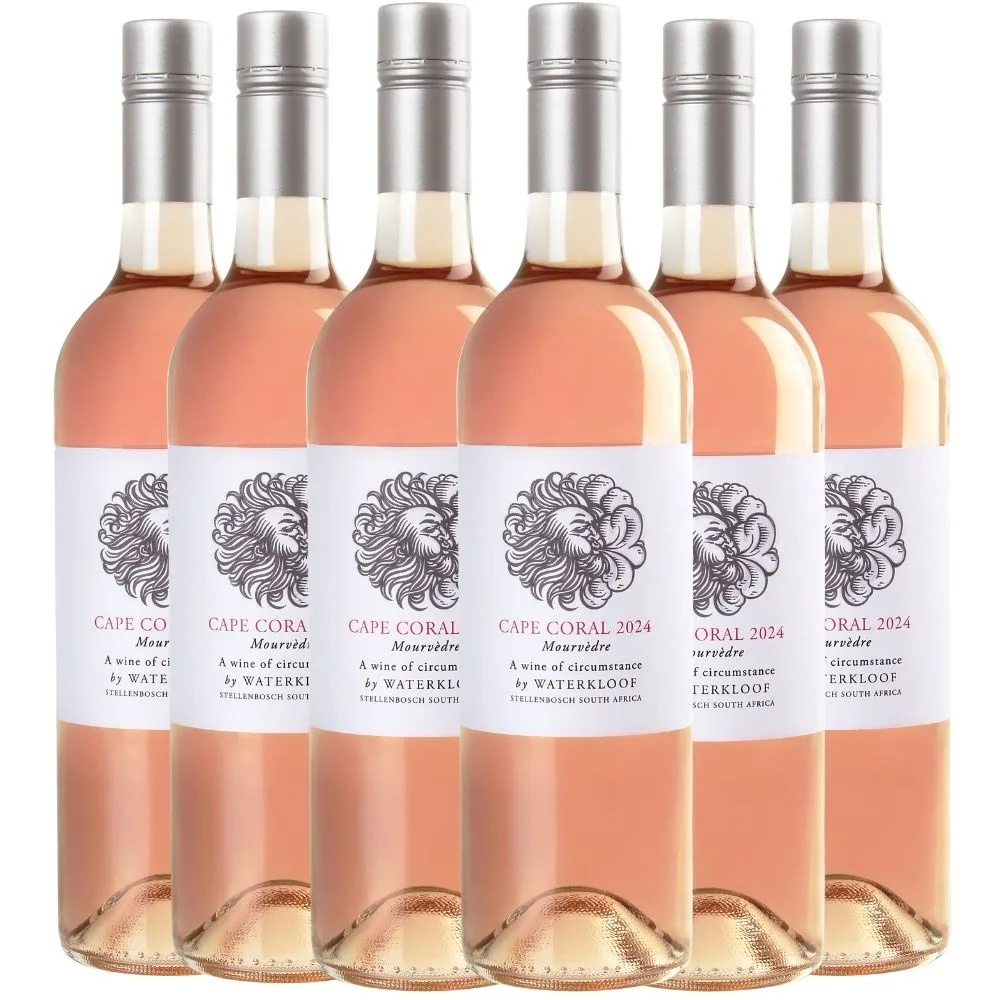
The Cape Coral Rosé is what happens when you grow Mourvèdre somewhere this extreme — perched 270 metres above False Bay, battered by Atlantic winds, farmed biodynamically, picked by hand, pressed whole-bunch and left to ferment with wild yeasts in old wood. The result is a pale, fragrant, deeply structured rosé that has nothing in common with weekend picnic pink. Just 5 tonnes per hectare. Decanter gave a previous vintage 90 points and described it as a wine of outstanding complexity and finesse.
The Waterkloof Estate
Waterkloof was founded in 2004 by Paul Boutinot on the Schapenberg — one of the Cape’s most distinctive coastal wine sites. Demeter-certified biodynamic since 2015 and a WWF Biodiversity Champion, the farm is worked with horses and farmed without compromise. Winemaking happens in a gravity-fed cellar with wild yeast fermentation, minimal intervention and nothing added except a little sulphur before bottling. Tim Atkin’s Cape Classification ranks Waterkloof at 5th Growth level — quietly one of the most important addresses in the Cape.
The vineyards sit 270–300 metres above sea level on the wind-battered Schapenberg, directly facing False Bay and the Atlantic. South-facing blocks, poor granitic soils, dry-farming and the constant Atlantic breeze combine to produce some of the lowest yields in the Cape — and wines with a mineral coastal character you won’t find anywhere else in the Winelands.
Tasting Notes
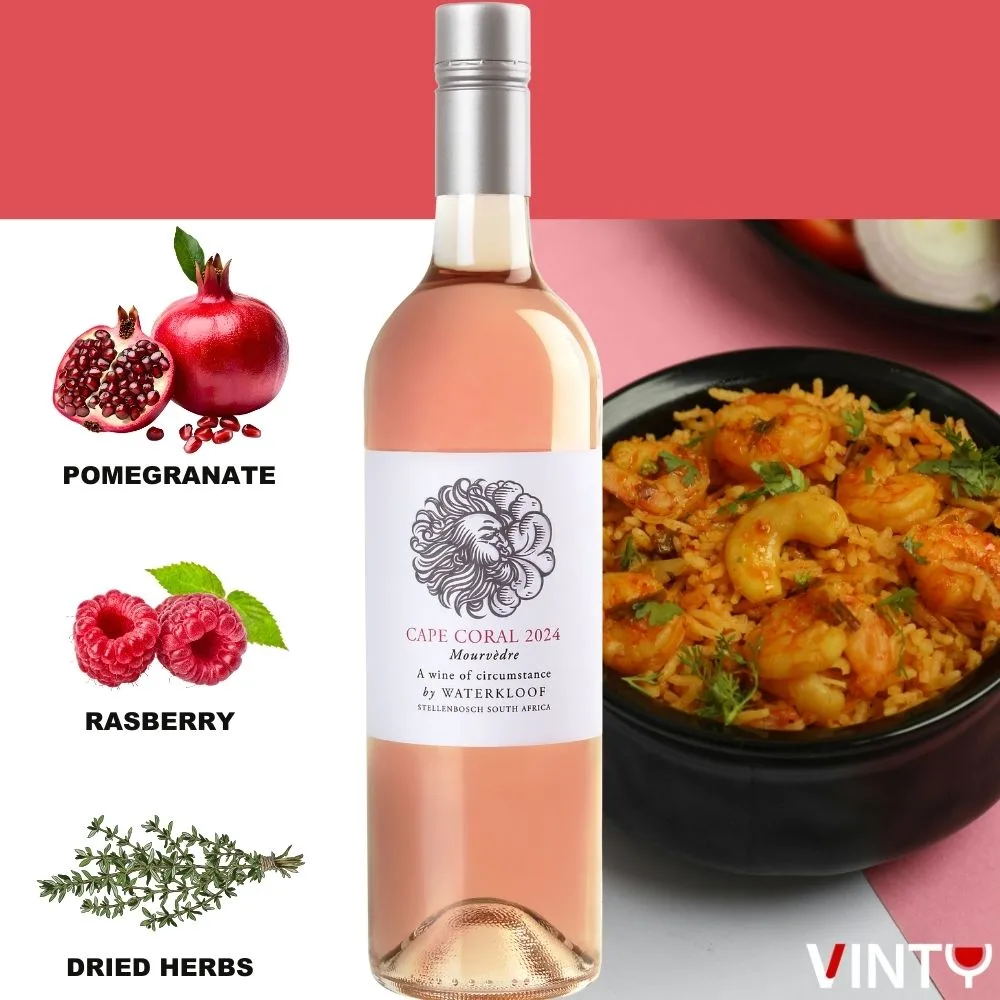
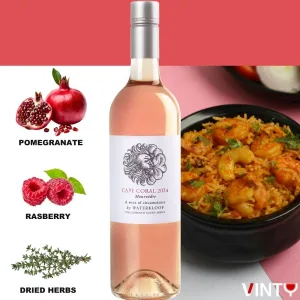
Appearance: Delicately pale salmon-pink with barely-there coral hues. Nose: Pomegranate, raspberry and dried herbs on the first pass, followed by a distinctive flintiness and subtle notes of peach and spice — quintessentially coastal South African. Palate: Silky and fine-boned with flavours of soft red fruit and a hint of sea-salt minerality. Fresh acidity carries through to a long, deeply satisfying finish. Finish: Long, savoury and briny — a rosé that demands food and rewards patience.
How It’s Made
The Mourvèdre vines are dry-farmed on biodynamic soils and yield a miserly 5 tonnes per hectare. Harvested by hand, the grapes go through a gentle whole-bunch pressing in a horizontal basket press — only the finest, softest juice is taken, with no skin maceration. The juice is gravity-fed into tank, settled naturally for 12 hours, then racked to old wooden fermenters where wild yeasts take over and ferment at their own pace. Extended time on fine lees adds complexity before bottling. Light filtration. Just enough sulphur to protect it. Nothing else.
Food Pairings
Grilled crayfish, fresh sushi or a classic Cape seafood platter. Also assertive enough to stand up to spicy peri-peri prawns or a Thai-style salad. One of the great braai rosés for summer evenings in the Cape — pair it with a platter of charcuterie, aged cheese and something off the braai.
Awards & Recognition
• Decanter: 90 points (previous vintage) — ‘Outstanding complexity and finesse’
Cellaring: Drink now – 2027.
The Cape Coral Rosé is made in tiny quantities from extreme coastal vineyards, biodynamically farmed on the Schapenberg since 2004. This isn’t a lifestyle rosé — it’s a serious wine that happens to be pink. Available at Vinty.